Viral Fever in Kids: Symptoms, Home Care & Warning Signs | Claris Hospital
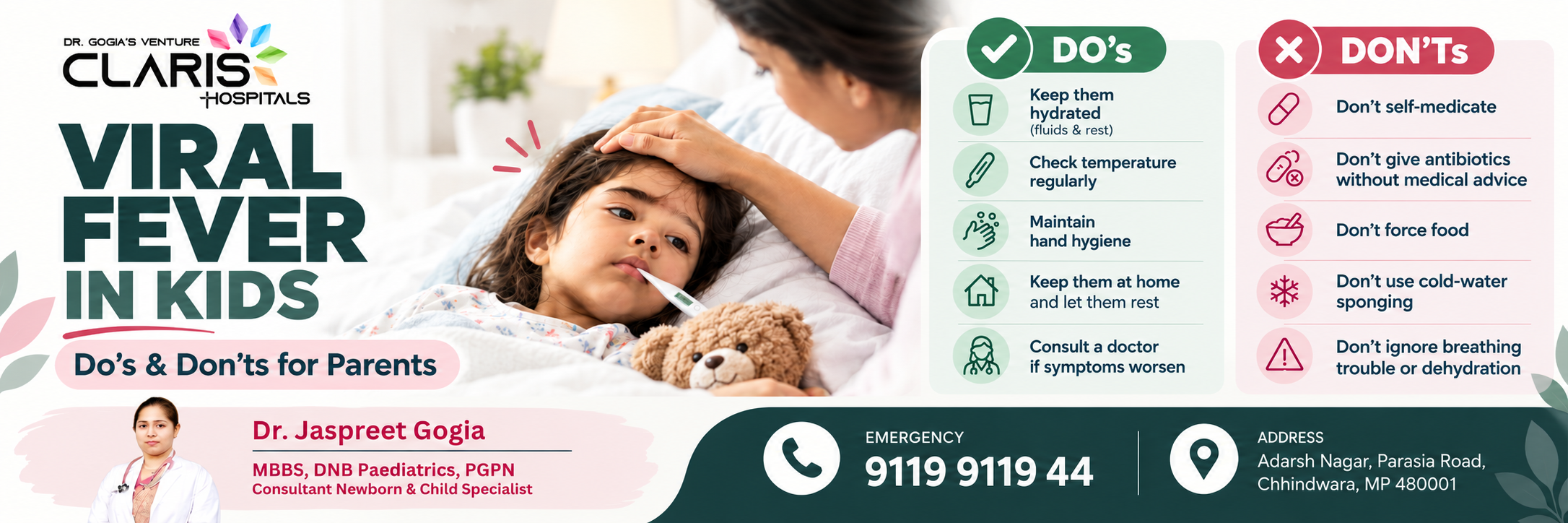
Viral Fever in Kids: Symptoms, Home Care and Warning Signs Every Parent Should Know
Fever in children can be worrying for parents, especially when a child becomes tired, loses their appetite or feels unusually uncomfortable. Viral infections are a common cause of fever in children, but not every fever is caused by a virus.
Knowing how to care for your child at home, recognise warning signs and understand when medical attention is needed can help you make informed decisions.
What Is Viral Fever in Children?
Viral fever refers to a fever associated with a viral infection. Viruses that cause common respiratory or gastrointestinal illnesses can lead to fever along with symptoms such as a runny nose, cough, sore throat, body aches or diarrhoea.
Fever is part of the body's response to infection. Its height alone does not reliably indicate how serious an illness is. A child's age, behaviour, hydration, breathing and other symptoms are also important.
Because viral and bacterial infections can sometimes have similar symptoms, a doctor may need to assess your child to determine the likely cause.
Common Symptoms of Viral Fever in Kids
Symptoms vary depending on the infection and the child's age. Common signs may include:
- - Increased body temperature.
- - Tiredness, weakness or reduced activity.
- - Reduced appetite.
- - Runny nose, cough or sore throat.
- - Headache or body aches in older children.
- - Irritability or increased sleepiness.
- - Vomiting or loose stools in some infections.
- Not every child experiences all these symptoms. Fever accompanied by a rash, persistent vomiting, breathing difficulty or other unusual symptoms should not automatically be assumed to be a simple viral infection.
How to Care for a Child With Fever at Home
If your child is alert, breathing comfortably and able to drink fluids, the following measures may help keep them comfortable while you monitor their condition.
1. Encourage Fluids
Offer frequent, small amounts of fluids. Breastfed babies should continue breastfeeding as usual. Depending on the child's age and symptoms, water, usual feeds or an oral rehydration solution may be appropriate.
If your child is vomiting or has diarrhoea, ask a healthcare professional about the most suitable way to prevent dehydration.
Watch for reduced urination, a dry mouth, fewer tears or unusual sleepiness, which may indicate dehydration.
2. Allow Adequate Rest
Let your child rest and sleep as needed. Keep them comfortable and avoid forcing them to take part in normal activities while unwell.
Children can usually return to their regular activities gradually as they recover and feel well enough.
3. Monitor Their Temperature and Behaviour
Use a suitable digital thermometer and follow its instructions. Note the temperature, when the fever began and any other symptoms.
Equally important, observe whether your child is responsive, drinking fluids, passing urine and breathing normally. A child who appears seriously unwell needs medical attention even if the temperature is not very high.
4. Dress Your Child Comfortably
Use comfortable, lightweight clothing and maintain a pleasant room temperature. Avoid excessive wrapping or trying to make your child feel cold.
Cold-water sponging, ice baths and alcohol rubs should not be used to bring down a child's fever. Focus on comfort and seek medical advice when needed.
5. Use Medicines Only With Appropriate Guidance
If your child is uncomfortable, a healthcare professional or pharmacist can advise on an appropriate fever-relieving medicine and dose based on the child's age, weight and medical circumstances.
Do not give aspirin to children unless specifically directed by a specialist. Do not give antibiotics without medical advice, because antibiotics do not treat viral infections. Avoid combining medicines that contain the same active ingredient.
Do not give paracetamol or other medicines to a very young infant without prompt medical guidance.
What Parents Should Avoid During Viral Fever
Some common practices can be unhelpful or unsafe. Parents should avoid:
- - Starting antibiotics without a medical assessment.
- - Giving medicines based on guesswork or another child's prescription.
- - Forcing a child to eat when they do not want to.
- - Using ice baths, cold-water sponging or alcohol rubs.
- - Ignoring signs of dehydration or breathing difficulty.
- - Delaying medical care when symptoms are severe or worsening.
Offer food if your child is willing to eat, but prioritise appropriate fluids and monitor their condition.
When Should You Take Your Child to a Doctor?
Arrange a medical assessment if your child's fever persists, symptoms worsen, the child is drinking poorly or you are concerned about their condition.
Seek urgent medical care if your child has any of the following warning signs:
- - Difficulty breathing or unusually fast breathing.
- - Extreme sleepiness, confusion or difficulty waking.
- - A seizure.
- - A stiff neck or severe headache.
- - A rash that does not fade when pressed.
- - Severe abdominal pain or persistent vomiting.
- - Signs of significant dehydration, such as very little urine or marked drowsiness.
Important: A baby younger than 3 months with a temperature of 38°C (100.4°F) or higher needs urgent medical assessment, even if the baby otherwise appears well.
Do not wait for the fever to become very high if your child has serious warning signs.
How Long Does Viral Fever Last in Children?
Many uncomplicated viral illnesses improve over several days, but the duration depends on the virus and the individual child. Some infections can last longer or develop complications.
Seek medical advice if the fever continues for several days, returns after improving, or is accompanied by new or worsening symptoms. A persistent fever should not automatically be attributed to a virus, particularly in areas where other febrile illnesses may occur.
Can Viral Fever Be Prevented?
Not all viral infections can be prevented, but several measures can reduce the risk of spreading infections:
- - Encourage regular handwashing with soap and water.
- - Teach children to cover coughs and sneezes.
- - Keep children home when they are unwell and follow medical or school guidance on returning.
- - Keep routine vaccinations up to date.
- - Maintain clean surroundings and avoid sharing items that may be contaminated with respiratory secretions.
- The appropriate preventive measures depend on the infection involved.
Frequently Asked Questions About Viral Fever in Kids
Is every fever in a child caused by a virus?
- - No. Fever may result from viral infections, bacterial infections and other conditions. A child's symptoms, age and clinical assessment help determine whether further investigation is needed.
Should I give antibiotics for viral fever?
- - Antibiotics do not work against viruses. They should only be used when prescribed by a qualified healthcare professional for an appropriate indication.
Should I use cold water to reduce my child's fever?
- - No. Cold-water sponging and ice baths can cause discomfort and shivering. Keep your child comfortably dressed and seek advice about appropriate fever management.
When is fever dangerous for a baby?
- - A baby younger than 3 months with a temperature of 38°C (100.4°F) or higher needs urgent medical assessment. Babies and children of any age also need urgent attention for breathing difficulty, seizures, reduced responsiveness or other serious warning signs.
When should I consult a paediatrician?
- - Consult a paediatrician if your child is getting worse, is not drinking adequately, has persistent fever or develops concerning symptoms. Seek emergency care for serious warning signs rather than waiting for a routine appointment.
Child Health Care at Claris Hospital, Chhindwara
When a child develops a fever, careful observation and timely medical advice can help parents make safer decisions. If you are concerned about your child's symptoms, consult a qualified paediatrician for an appropriate assessment.
Claris Hospital is located at Adarsh Nagar, Parasia Road, Chhindwara, Madhya Pradesh 480001.
Emergency contact: 9119 9119 44.
Medical disclaimer: This article is for general educational purposes and is not a substitute for professional medical advice, diagnosis or treatment. Do not delay urgent medical care when a child has serious warning signs.