Is Swelling Normal in Pregnancy? Causes & Warning Signs | Claris Hospital
Is Swelling Normal in Pregnancy? Causes, Relief Tips and Warning Signs
Swelling in the feet, ankles and hands is common during pregnancy, especially in the later months. As pregnancy progresses, the body retains more fluid, and the growing uterus can affect blood circulation from the legs back towards the heart.
Although mild, gradual swelling can be a normal part of pregnancy, some types of swelling may indicate a serious medical condition. Knowing the difference can help expecting mothers recognise when they need medical attention.
Why Does Swelling Occur During Pregnancy?
During pregnancy, the body retains additional water to support the growing baby. Hormonal changes also influence fluid balance, while pressure from the growing uterus can slow the return of blood from the lower body.
As a result, fluid may collect in the tissues, particularly around the feet and ankles. Swelling may become more noticeable towards the end of the day, after prolonged standing or in hot weather.
This is often called pregnancy-related oedema.
What Type of Swelling Is Usually Normal?
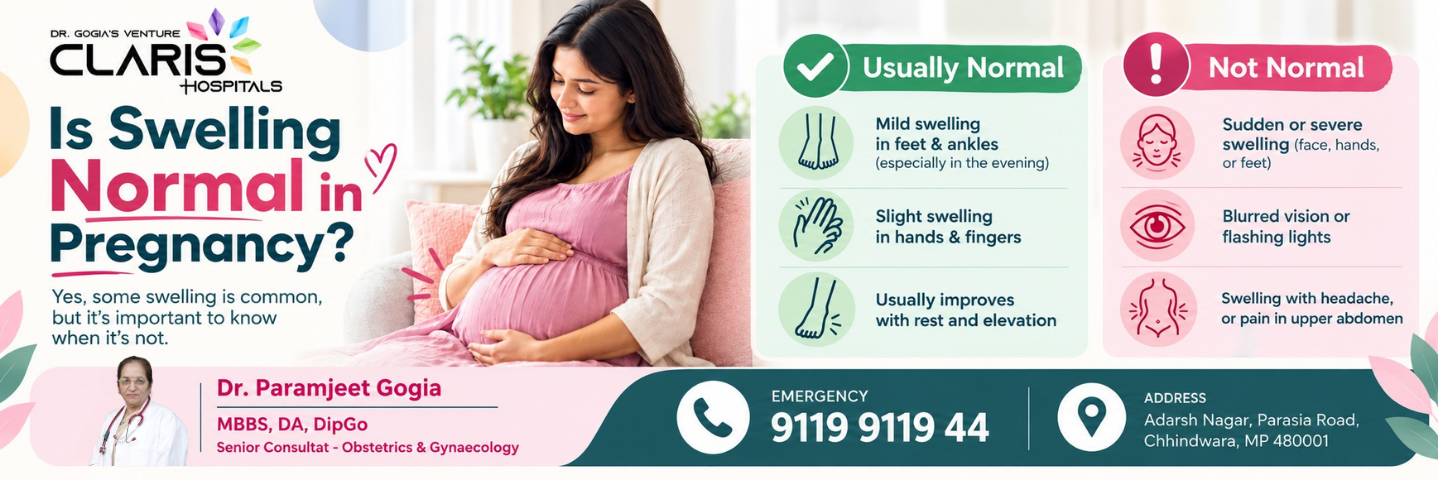
Swelling is more likely to be part of normal pregnancy changes when it:
- - Develops gradually over time.
- - Mainly affects both feet and ankles.
- - Becomes more noticeable later in the day.
- - Improves after resting or elevating the legs.
- - Occurs without other concerning symptoms.
- Mild swelling can also affect the fingers and hands. However, new or Increasing swelling should not automatically be considered normal, especially if it develops suddenly.
When Is Swelling During Pregnancy a Warning Sign?
Swelling can sometimes be associated with pre-eclampsia, a pregnancy complication involving high blood pressure that can affect the mother's organs and the baby's well-being.
Contact your maternity care provider immediately if you notice:
- - Sudden or rapidly increasing swelling of the face or hands.
- - A severe or persistent headache.
- - Blurred vision, flashing lights or other changes in vision.
- - Pain below the ribs or in the upper abdomen.
- - Sudden swelling accompanied by feeling very unwell.
These symptoms need urgent assessment, particularly after 20 weeks of pregnancy, although pre-eclampsia can also develop after delivery.
Do not wait for all symptoms to appear. Pre-eclampsia can sometimes occur without obvious swelling.
Seek emergency medical care for severe breathing difficulty, chest pain, collapse or other serious symptoms.
Swelling, pain, warmth or redness affecting mainly one leg may indicate a blood clot and also requires urgent medical assessment.
7 Safe Ways to Help Reduce Mild Pregnancy Swelling
If your swelling is mild and your maternity care provider has not advised any restrictions, the following measures may help improve comfort.
1. Elevate Your Feet
Rest with your feet supported on a cushion when possible. This may help reduce fluid accumulation around the ankles.
2. Avoid Standing or Sitting for Long Periods
Change positions regularly. If you sit for long periods, take gentle movement breaks when comfortable and safe to do so.
3. Stay Gently Active
Walking and pregnancy-appropriate movement can support circulation. Follow your healthcare professional's advice about physical activity, especially if your pregnancy has complications.
4. Wear Comfortable Footwear
Choose supportive shoes that do not squeeze your feet. Avoid tight socks or clothing that leaves deep marks.
5. Drink Enough Water
Continue drinking fluids regularly. Do not deliberately restrict water to reduce swelling, as adequate hydration remains important during pregnancy.
6. Rest in a Comfortable Position
Many pregnant women find resting on their side, particularly the left side, comfortable in later pregnancy. Use pillows for support and follow your maternity care provider's guidance.
7. Attend Regular Antenatal Check-ups
Blood pressure monitoring and other antenatal assessments help identify complications that may not cause obvious symptoms. Report new or worsening swelling rather than waiting for your next routine appointment if you are concerned.
Do not take diuretics, herbal remedies or other medicines to reduce swelling unless specifically prescribed by your healthcare professional.
Can Swelling Be a Sign of Pre-Eclampsia?
Yes, swelling can occur with pre-eclampsia, particularly when it develops suddenly or affects the face and hands. However, swelling alone cannot diagnose the condition, and many pregnant women experience ordinary swelling without pre-eclampsia.
Diagnosis involves clinical assessment, blood pressure measurement and, when indicated, urine tests, blood tests or additional monitoring.
Prompt assessment is important because pre-eclampsia can progress and may threaten the health of both mother and baby.
Does Pregnancy Swelling Go Away After Delivery?
Pregnancy-related fluid retention generally improves after childbirth as the body gradually removes the excess fluid. However, the timing varies.
Swelling that suddenly worsens after delivery, or occurs with a severe headache, visual changes, upper abdominal pain, chest pain or breathing difficulty, must not be dismissed as normal postpartum recovery. Postpartum pre-eclampsia and other complications can occur after childbirth.
Seek prompt medical advice for new, worsening or persistent swelling after delivery.
Frequently Asked Questions About Swelling During Pregnancy
Is swelling in the feet normal during pregnancy?
Mild, gradual swelling in both feet and ankles is common, particularly in later pregnancy. Sudden, severe or one-sided swelling, or swelling accompanied by other warning signs, requires medical assessment.
Is swelling in the hands and face normal during pregnancy?
Some hand swelling can occur during pregnancy, but sudden or marked swelling of the hands or face can be a warning sign of pre-eclampsia. Contact your maternity care provider immediately if this happens.
Does swelling mean I have high blood pressure?
No. Swelling alone does not establish whether your blood pressure is high. Blood pressure measurement and appropriate medical assessment are needed to evaluate possible pre-eclampsia.
Should I drink less water if my feet are swollen?
Do not restrict fluids on your own. Drink adequate fluids and ask your healthcare professional for individual advice if you have swelling or another medical condition.
When should I worry about swelling during pregnancy?
Seek immediate medical advice for sudden swelling, particularly of the face or hands, or swelling with a severe headache, visual disturbances or upper abdominal pain. Severe breathing difficulty or chest pain requires emergency care.
Pregnancy Care at Claris Hospital, Chhindwara
Every pregnancy is different. While mild swelling may be a normal pregnancy change, recognising warning signs and attending regular antenatal check-ups are important for maternal and baby health.
If you are concerned about swelling during pregnancy, consult a qualified obstetrician for an appropriate assessment.
Claris Hospital is located at Adarsh Nagar, Parasia Road, Chhindwara, Madhya Pradesh 480001.
Emergency contact: 9119 9119 44.
Medical disclaimer: This article is for general educational purposes only and does not replace professional medical advice, diagnosis or treatment. Sudden swelling or swelling accompanied by warning signs during pregnancy or after delivery requires prompt medical assessment.