Harmful Effects of Self-Medication: Risks & Precautions | Claris Hospital
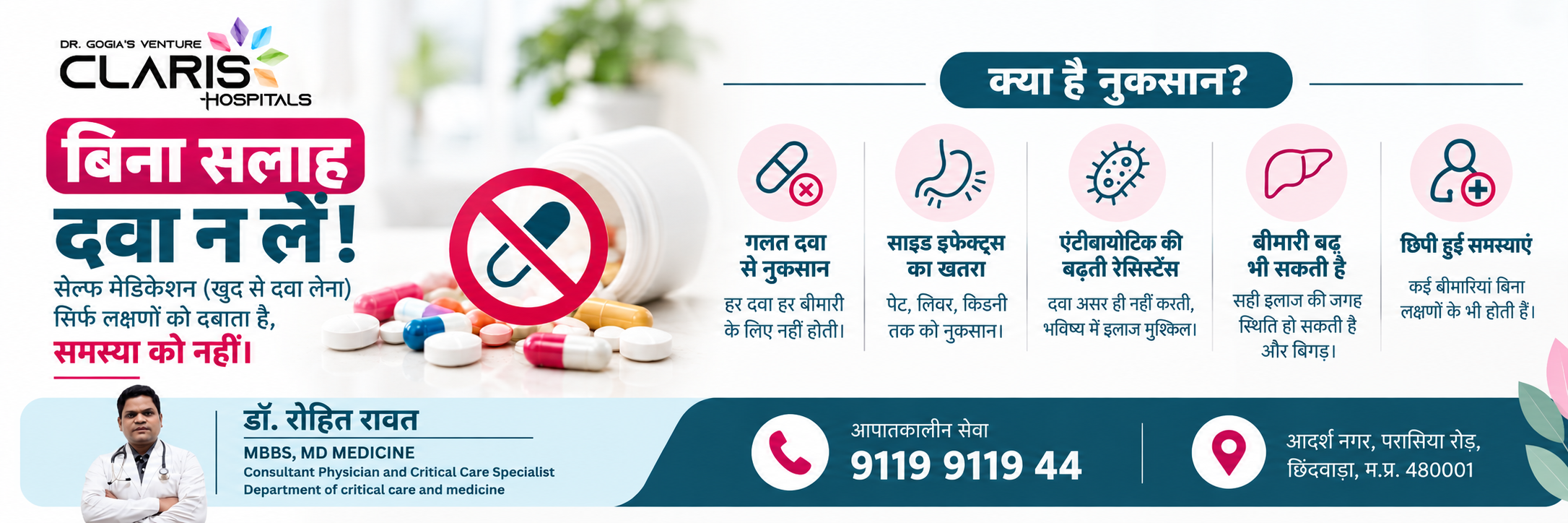
Harmful Effects of Self-Medication: Why You Should Not Take Medicines Without Proper Advice
When you develop a headache, fever, stomach pain or cold, it can be tempting to take a medicine you have used before or one recommended by a friend or family member. While some minor symptoms can be managed with appropriate over-the-counter medicines, taking medicines without understanding their risks can sometimes cause serious health problems.
Self-medication becomes particularly risky when people use prescription medicines without medical supervision, take incorrect doses, combine medicines without checking for interactions or continue treatment without knowing the underlying cause of their symptoms.
Understanding the harmful effects of self-medication can help you make safer decisions about your health.
What Is Self-Medication?
Self-medication means using medicines to manage symptoms or health conditions without appropriate guidance from a qualified healthcare professional.
Examples include:
- - Taking antibiotics without a prescription or appropriate medical assessment.
- - Using someone else's prescription medicine.
- - Taking painkillers repeatedly without investigating persistent pain.
- - Changing a prescribed dose without consulting the prescriber.
- - Combining multiple medicines without checking their ingredients or interactions.
- - Continuing a medicine for longer than recommended.
- Some medicines are specifically available over the counter and may be suitable for short-term use when taken according to the label. However, even non-prescription medicines can cause side effects or interact with other medicines. If you have an ongoing medical condition, take other medicines, are pregnant or are treating a child, professional advice is especially important.
5 Harmful Effects of Self-Medication
1. Risk of Side Effects and Incorrect Dosage
Every medicine has potential benefits and risks. Taking too much, taking it too frequently or using a medicine that is unsuitable for your health condition can lead to harmful effects.
For example, excessive use of certain painkillers may damage the stomach or kidneys, while too much paracetamol can cause serious liver injury.
The risk may be higher in children, older adults and people with existing medical conditions. Always follow the medicine label and the instructions provided by your healthcare professional.
2. Dangerous Drug Interactions
Taking two or more medicines together can sometimes change how they work or increase the risk of side effects.
Interactions may occur between prescription medicines, over-the-counter products, supplements and certain herbal remedies. Some medicines may also interact with alcohol or particular foods.
For example, combining multiple products that contain paracetamol can unintentionally lead to an excessive dose. Some painkillers can also increase bleeding risk when taken with certain blood-thinning medicines.
Inform your doctor or pharmacist about all medicines and supplements you use before starting a new product.
3. Antibiotic Resistance
Antibiotics treat certain bacterial infections; they do not treat viral illnesses such as the common cold or flu.
Taking antibiotics unnecessarily, using leftover antibiotics or taking them without an appropriate prescription can expose people to avoidable risks and contribute to antimicrobial resistance. This occurs when microorganisms develop resistance to medicines intended to treat them.
Antibiotic resistance can make some infections more difficult to treat and may limit effective treatment options.
Use antibiotics only when prescribed by a qualified healthcare professional, and follow the prescribed instructions. Do not share antibiotics or use leftover courses.
4. Delayed Diagnosis and Incorrect Treatment
A medicine may temporarily reduce a symptom without treating the underlying cause.
For example, repeated painkiller use may relieve a headache while the reason for recurring headaches remains undiagnosed. Similarly, reducing a fever does not necessarily mean the infection or illness has resolved.
Persistent fever, abdominal pain, chest discomfort or recurring headaches may require medical evaluation. Relying only on self-medication can delay diagnosis and appropriate treatment.
Seek medical advice if symptoms persist, return frequently, worsen or are accompanied by warning signs.
5. Worsening of Existing Medical Conditions
Some medicines can worsen existing health problems or require special precautions.
Certain painkillers may be unsuitable for people with kidney disease, stomach ulcers, heart conditions or specific blood-thinning treatments. Some decongestants may be unsuitable for people with particular cardiovascular conditions.
Pregnant or breastfeeding individuals, children and older adults may also need different precautions when using medicines.
Before starting a medicine, consider your existing health conditions and discuss any concerns with a doctor or pharmacist.
Why Is Self-Medication Common?
People may choose to self-medicate because they want quick relief, have used a medicine previously, receive recommendations from friends or family, or find it inconvenient to seek medical advice.
Easy access to health information online can also lead people to select medicines based on symptoms without understanding the possible causes.
However, similar symptoms can occur in different medical conditions, and the same medicine may not be suitable for everyone. Advice that helped another person may be unsafe for you.
How Can You Use Medicines Safely?
Following a few basic precautions can reduce the risk of medicine-related harm.
- - Consult a qualified healthcare professional when you are unsure about a symptom or treatment.
- - Read the label and follow the recommended dose and duration for over-the-counter medicines.
- - Never use another person's prescription medicine.
- - Check the active ingredients before combining medicines to avoid accidental duplication.
- - Inform your doctor or pharmacist about your existing medicines, allergies, supplements and medical conditions.
- - Store medicines safely and keep them out of children's reach.
- - Do not start, stop or change prescribed medicines without appropriate advice.
- - Seek medical assessment for persistent or worsening symptoms instead of repeatedly treating them yourself.
A pharmacist can also help explain medicine labels, possible interactions and appropriate use of non-prescription products.
When Should You Seek Medical Attention?
Consult a healthcare professional if symptoms persist, keep returning, worsen or require repeated medication.
Seek emergency medical assistance if you experience severe breathing difficulty, chest pain, collapse, seizures or other serious symptoms.
If you suspect that you or someone else has taken too much medicine, the wrong medicine or a potentially dangerous combination, seek urgent medical advice even if symptoms have not appeared. Do not induce vomiting unless specifically instructed by a medical professional.
Frequently Asked Questions About Self-Medication
Is self-medication always harmful?
Not necessarily. Some minor symptoms can be managed safely with suitable over-the-counter medicines when used according to the label. The risk increases when medicines are misused, combined incorrectly, taken in excessive doses or used without considering the person's medical circumstances.
Can I take antibiotics for a cold or viral fever?
Antibiotics do not treat viral infections. A healthcare professional can assess whether an antibiotic is necessary when a bacterial infection is suspected or confirmed.
Is it safe to take a medicine that worked for me previously?
Not always. Your current symptoms may have a different cause, and your health status or other medicines may have changed. Check the label and seek advice if you are unsure whether the medicine is appropriate.
Can painkillers damage the kidneys or liver?
Some painkillers can cause kidney, stomach or cardiovascular complications in certain circumstances. Excessive paracetamol can cause serious liver injury. The risk depends on the medicine, dose, duration and individual health factors.
What should I do if I experience side effects after taking a medicine?
Stop and seek medical advice before taking further doses if you suspect a serious reaction, unless a clinician has advised otherwise for an essential prescribed medicine. For breathing difficulty, swelling of the face or throat, collapse or another severe reaction, seek emergency care immediately.
Consult a Healthcare Professional at Claris Hospital, Chhindwara
Medicines can be an important part of effective treatment when selected and used appropriately. Understanding their risks and seeking professional advice when needed can help prevent avoidable complications.
If you are concerned about persistent symptoms, medicine side effects or whether a medicine is suitable for you, consult a qualified healthcare professional.
Claris Hospital is located at Adarsh Nagar, Parasia Road, Chhindwara, Madhya Pradesh 480001.
Emergency contact: 9119 9119 44.
Medical disclaimer: This article is for general educational purposes only and does not replace professional medical advice, diagnosis or treatment. Medicine choices and doses should be based on individual circumstances and appropriate clinical guidance.